Series
Masters Group C
Historic racing for Group C prototypes — the ground-effect endurance icons of the 1980s and early 90s.
2026 · 2 of 2About Masters Group C
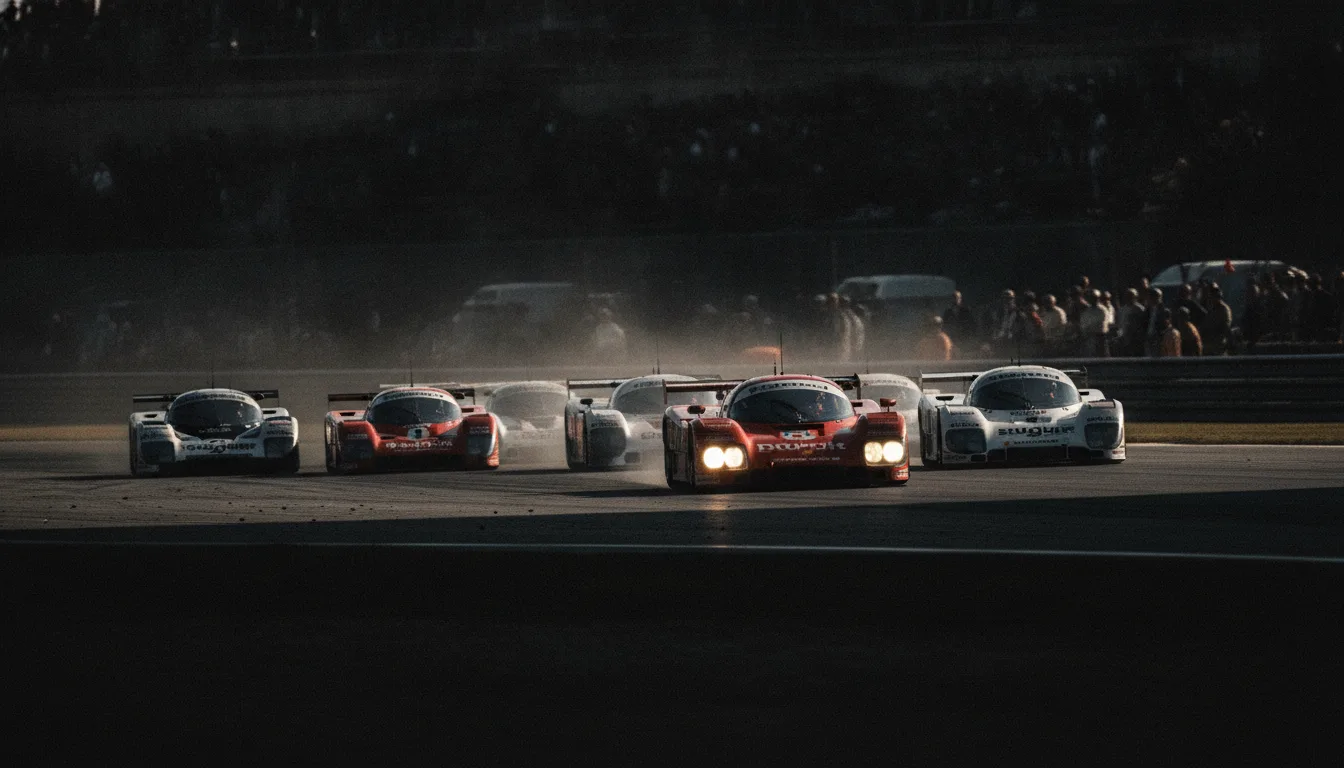
Masters Group C brings the ground-effect endurance prototypes of the 1982–1993 era back to speed — Porsche 962s, Jaguar XJRs, Sauber-Mercedes and their contemporaries. Run at major European historic festivals, it is one of the loudest and fastest sights in historic motorsport.
- Discipline
- Sports prototype
- 2026 season
- 2 rounds · season over
- All seasons
- 2 events
- Countries
- 4
- What's racing
- Done
- Next
- Going
- Watching
- To come
Masters Group C guide
History
Group C was the FIA's top sportscar category from 1982 to 1993, contested in the World Endurance and World Sportscar Championships and at the Le Mans 24 Hours. Its regulations capped fuel allowances rather than engine size, rewarding efficiency and producing legendary prototypes such as the Porsche 956 and 962, Jaguar's XJR family and the Mercedes-powered Saubers, with Nissan, Toyota, Mazda and Lancia also in the fight. By the late 1980s the category rivalled Formula 1 in popularity, but a switch towards costly F1-derived engines drove entries away and the 1993 championship was cancelled before it began. Masters Historic Racing launched Masters Group C as a new series from the 2025 season to put these prototypes back on track in competitive racing, restoring a grid that had been a fixture at major historic events until numbers dwindled in the late 2010s.
The cars
The grid is made up of period sports prototypes built between 1982 and 1993 — the Group C machines that raced at Le Mans alongside their IMSA GTP contemporaries. The organiser lists marques including Porsche, Jaguar, Nissan, Spice, Courage, Aston Martin, Cougar, Ecosse, March and Lancia, with class structures that reference famous names from Le Mans and IMSA history. Cars must run in their authentic period liveries.
Format & rules
A Masters Group C meeting runs to a simple pattern: free practice, then qualifying, then two races of 40 minutes each. Entries can be shared between two drivers, echoing the endurance roots of the cars. An international racing licence is required to compete.
Watching it
The series appears at a select handful of headline historic meetings each year: its debut 2025 season included the Silverstone Festival, where Group C's return was a centrepiece, and the 2026 calendar takes in the Grand Prix de France Historique at Paul Ricard and the Monza Revival. Trackside, these are the fastest and loudest sportscars of their generation — machines that once topped 400 km/h at Le Mans — running in their iconic 1980s liveries.
Sources: Wikipedia + mastershistoricracing.com